I re-posted this blog. Why? I hear many a times that study is tough. Yet there are billions of people who have tougher jobs and don't complaint!
Truly exciting prospects you have when you graduate. Of course, you will
choose a career that is promising. Not one that works you 365 days a
year!
Will you choose this job? Follow the interviews on the video below and
tell me what you think. You may not be qualified for the job though, as
it requires Finance Degree, Social Science with excellent inter-personal
skills and not to forget culinary skills.
Pic 01 : " I really need to get away. But smile first."
You invite a lady for dinner. What does she mean when she says, "I am busy"? Usually, you have to use your contextual judgment to note the tone of her voice. If she says politely with a smile, this usually means I am not interested to go out with you. In contrast, if the reply is with round sincere eyes and with warmth in her voice and a gaze, well this 'could' mean that she really is busy.
Pic 02: When is he going to ask me out?
But you have the advantage to read the body language in person. This is tough if applied to Corporate Governance context. Because Board issued announcement, thus you have no opportunity to read their body language. On April 6th, 2016, Wintoni Berhad announced the entire Audit Committee and the Chief Financial Officer resign due to "personal reasons". Another Non-Executive Director earlier resigned due to "other Commitments". The entire board resigned? If 4 ladies tell you, I am busy, this is something to do with you, isn't it? Similarly, 4 top management resigned, that must have smelled fishy. This "Personal Reasons" coincide with the company losing 75% of its paid up capital. From F8 AA perspectives: This tells you the Internal Controls are weak enabling possible fraud and missappropriation of assets. You may need to explain Auditor's responsibilities in uncovering fraud as per ISA 240. From P1 GRE perspectives: The Audit Committee is ineffective to probe and to review the internal controls and risks facing Wintoni.
The Nomination Committee is ineffective to promote division of responsibilities in order to reduce Executive Directors dominance over Board The Executive Directors somehow are able to interfere and influence the Board that result in Non Executive Directors inability to review the company's strategy, risks and company's performance. From P7AAA Perspectives: This is the fun part. You as an engagement Partner would want to propose Forensic Audit and Internal Control Review engagement. Of course, this is accompanied by fat fee:
propose the Audit Related engagement
plan out quality controls and boundaries.
determine the type of report required and its purpose.
From an investor perspective: I have ONE WORD - RUUUUNNNNNN!!
Pic 03 : You know what it means.
In another word - SEEEEELLLLLLLLL!!
Pic 04: Oh my goodness. That is my whole tuition fee lost on stocks.
+++++++++++++++++++++++++++++++++++++++++++++++++++++++++++ On the Article, please enjoy.
Wintoni CFO and entire audit committee resign
KUALA LUMPUR: Wintoni Group Bhd’s chief financial officer Kong Chin Lam
and the three independent directors who made up its entire audit
committee have resigned, citing “personal reasons.”
In filings with Bursa Malaysia, the loss-making automation system
designer said Kong’s resignation was effective March 31 while those of
Datuk Muzaffirah Yurhaningseh Mazputri Ahmad Fairuz, Suaran Singh Himat
Singh and Haflil Feiruz Muhammad Feisol were effective April 1,
Wintoni said all the letters of resignation were received on April 4 (Monday).
The audit committee chairman, Chaang Kok Fai, had stepped down on Dec 8, 2015, citing “other commitments.”
Chaang and the three directors who resigned effective April 1 had appointed to the board on the same day (Sept 10, 2015).
In February, the company was classified as a Guidance Note 3 company as
its shareholders’ equity on a consolidated basis is 25% or less of its
issued and paid-up capital based on the unaudited consolidated quarterly
results for the period ended Sept 30, 2015.
Among others, Wintoni is required to submit to Bursa Securities a
regularisation plan and obtain the latter’s approval to implement the
plan within 12 months from the first GN3 announcement (by Feb 25, 2017).
Wintoni posted an unaudited net loss of RM49.8mil for the year ended Dec
31, 2015, compared with a net profit of RM4.6mil achieved in the
preceding year.
In the last six months, Wintoni share price has fallen more than 80% to 3.5 sen at Wednesday’s close.
Source: The Star, 2016, Wintoni CFO and entire audit committee resign, http://www.thestar.com.my/business/business-news/2016/04/06/wintoni-cfo-and-entire-audit-committee-resign/ , April 6th
- Warning: Do not try this at home, for the actors and participants below are either professionals or desperate last-minute people. Viewers are advised to use discretion, if they want to maintain sanity.
Exams are a time of great stress. Especially in East Asia, where the pressure is on to achieve sky-high results.Whatever
the cultural differences, all students have their own rituals and
superstitions, whether it is playing a lucky song, eating special food
or even wearing a pair of lucky pants.
Here are some of the ways that exam-crazy students from across Asia ensure they pass with flying colours.
And there is a comment form at the end to let us know your favourite exam rituals and special ways of preparing.
1. How KitKat got lucky.
Pic 01 KitKat in Japanese sounds like "surely winning" and has become a good omen for exams
Traditionally,
Japanese students would eat Katsudon before or on the day of an exam,
comprising a warm bowl of rice topped with egg and a deep-fried pork
cutlet.
The dish name's likeness to the word "katsu", meaning "winning" is thought to bring students luck.
But KitKat in Japan has also been marketing itself as a bringer of good luck.
Pronounced
as "kitto katto", the chocolate's name is similar to the phrase "kitto
katsu", meaning "surely winning", making it a good candidate for a good
luck charm.
2. An apple a day.
Pic 02: Image caption
Fruit of learning: Hong Kong students eat apples before exams
Canteens across Hong Kong University campuses serve apples, and a variety of apple dishes, in the run-up to the exam period.
"The
pronunciation of apple in Chinese is "ping guo", which also means
"safety". So it's considered that you will safely pass the exam," says
Chong Wang, from Nanjing in China.
3. Avoid washing your hair.
Pic 03: Bad hair day: Rinsing away any chance of success
In your vicious cycle of all-night revision, microwave food and highlighter pens, you may have forgotten to have a shower.
But not to worry - in South Korea, it's thought that washing your hair could wash all the knowledge out.
"There
was one boy in our class who didn't wash hair before exams. The rest of
the time he was very clean, but once you came to know his exam ritual,
you didn't want to go near him," said one student about a classmate.
4. Eat Cashew nuts before the exams.
Pic 04: For Chinese students, the name for cashew nuts is like "wish to pass"
Around
a month before exams start in Hong Kong, students in clubs, societies
and residential halls, will gather for "superpass", or ging guo.
"Superpass"
is a series of activities aimed at helping you pass your exams with a
top score. The first part is the superpass dinner, which is usually held
at a Chinese restaurant.
It's
important that students eat pork cubes with cashews, one of the
signature superpass dishes. The Chinese word for "cashews" sounds like
the word for "wish to pass", and "pork cubes" sounds like "desire for a
distinction".
Homophones, or homonyms, play a big part in ritual and superstition in many East Asian languages.
5. A slice of luck
Pic 05: Cutting a roast pig is a part of many ceremonies in Hong Kong, including "superpass"
Returning
to the hall, it's time for everyone to have a turn at slicing through a
giant roast pig, considered to be an important sacred offering in
China.
Each participant is given one try at cutting the pig into two halves.
Those
who succeed are thought to go on to pass all their exams the first time
round, and those who fail, will have to re-sit some.
This is followed by eating kiwis, as the Chinese word for the fruit sounds like "easy to pass exams." 6. Praying for success - I believe this is quite popular among KL/PJ Students
Pic 06: Parents in South Korea praying for their children as they take exams
Many students in East Asia have the attentive support of their parents, whether they want it or not.
"Some
parents wait for their children outside the exam hall praying for them
to pass," says South Korean teacher Ji-Youn Jung, "My mum did, but my
test results turned out to be awful."
Ultra-keen parents will go as far as praying at Buddhist temples every day for the 100 days leading up to the exam.
7. Lucky watch versus a slippery soup.
Pic 07: Slippery customer: Seaweed soup could mean exam disaster
In
South Korea, the slipperiness of the widely-eaten seaweed soup is
thought to mean you will lose all the knowledge from the notes you've
been revising like mad.
"I try not to have seaweed soup before
important plans like exams or interviews. But if I happen to eat it
without consciousness, I don't worry too much," Ji-Youn says.
But
Chong Wang from China says: "My personal tradition is to have noodles
for breakfast on exam day, as noodles mean "everything goes smooth" in
Chinese. But I also take my lucky watch."
8. Chicken power.
Pic 08: Could chickens help boost your brain power?
A bit of
sugar might give you an energy boost, but South Koreans also believe
that this sugary snack could have exam-passing powers.
Yeot, a traditional sticky food, is eaten before important exams, especially university entrance exams.
Ji-Youn explains: "Yeot is a sticky sweet, and the Korean words for "sticky" and "pass entrance exam" sound the same."
Or else drink some chicken juice, which is thought to give your brain a boost.
Students
in Malaysia, Hong Kong, Singapore and China tend to drink this while
revising for exams, and on the morning of the exam itself.
"It's nothing superstitious," says Dylan Lee Soon Yoong, a Singaporean student at University College London.
"I
drink chicken essence on the morning of the exam... you down it like a
shot after heating it up. It's supposed to help your concentration and
is marketed pretty heavily to students in Singapore."
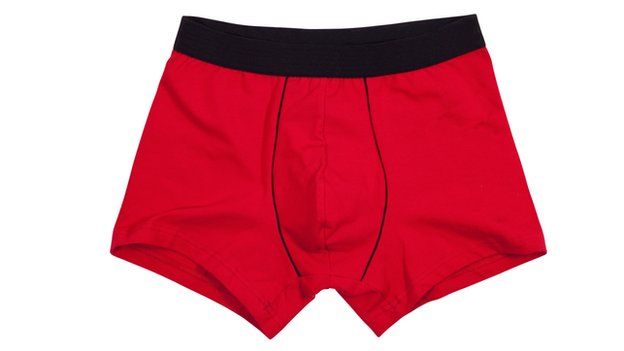
9. Wear red underwear.
Pic 09: Well read: All you need to remember for exam success, lucky red pants
Red
is widely believed to be a lucky colour in China. So many believe that
it's a good idea to wear some red clothing, or more specifically red
underwear, during an exam.
When a person is particularly successful, there is a Chinese saying, "Are you wearing red underwear?"
But
Chong Wang warns: "Some people may avoid wearing red during exams
because in China, fail scores are written in red on score sheets."
Image copyrightNUSImage caption10. Singaporean students style: Pray for mercy from the "Bell Curve God"
Pic 10: Singaporean students can pray electronically to the "Bell Curve God"
The
Bell Curve God is an embodiment of university students' fears of the
bell curve grading system used in Asia's top universities, such as the
National University of Singapore and Nanyang Technological University.
Bell
curve grading means not just measuring how well you did in an exam, but
rather how you did in relation to everyone else in your class. In an
already high-achieving country, that pushes competitiveness to the max.
Shrines to the Bell Curve God have been set up at both universities, where food and candles are left as offerings to the "God".
The
National University of Singapore has gone as far as setting up a
website, Facebook and Twitter account for the Bell Curve God, so that
students can pray electronically.
"As students, we are subject to
the omnipotent, inscrutable force that is the Bell Curve God. He is the
arbitrary being that decides our grades," Dylan Lee Soon Yoong
explains.
CONCLUSION
Hmmm... On P2 (Corporate Reporting), I remember one ACCA Lecturer told me, "If it is not Debit, it must be Credit. This is easier than I thought."
You can do lots of hard work and ritualistically observe all the above ten ways. Remember to buy the red underwear from UNIQLO, heard it is better fabric and pricing. Or, you can try the old and tested way, pore over Past Years Questions, attend classes, do your tests and graduate like the rest of us. It never fails.
Source: Jody-Lan Castle, 2016, BBC News, http://www.bbc.com/news/business-35614030, Date: 3rd March
Note: Supply chain management, value
chain, e-marketing are Examiner Steve Skidmore’s favourite examinable topics.
You definitely want to focus on how to provide solutions for a specific case
scenario.
Special Note: Steve Skidmore is known for inserting "new knowledge" on Exam Answers, so you won't find the information below in your textbooks.
What is Supply chain management?
Supply chain management involves the coordination of all supply activities of
an organization from its suppliers and delivery of products to its customers.
Supply chain management includes not only supplier and
buyer, but also the intermediaries such as the supplier’s suppliers and the
customer’s customers.
To illustrate the Food Supply Chain, see the pictures below.
Farm : Cow Herds as the Upstream Supply chain
Processing Meat Factory
Logistics to deliver to Restaurants, Outlet, Retail/Hyper marts.
Final Product a Platter
Ummm... Do I need to explain this?
What are the Six Challenges in Supply chain management?
According to Dave Chaffey, there
following are:
1.Pressure
to reduce costs of manufacturing and distributing products in order to remain
competitive
2.Demand
forecasting
3.Failure
to deliver products on time consistently or lack of items on shelf in retailer
4.Failure
to deliver or ship correct product
5.High
inventory costs
6.Time for
new product development
Question: How can Genting Hotel
and Casino restructure its supply chain? Recommend any hardware infrastructure
and software solutions applicable to your restructuring solutions. [15 marks]
Suggested
Answer:
Assume we apply Genting Hotel supply chain that requires restructuring
supply chain.
$9.99 to travel to Genting Casino Hotel?! What are we waiting for?
Link to Airline Supply Chain
Link to Land transport Supply Chain
Add value to Value System Stream - Restaurant for guests
1.Cooperation relationship with linkage to upstream
supply chain with airlines like Air Asia, Ryan Air to determine how many tourists are
arriving. This will assist in planning the forecasting of demand based on
seasonal needs.
2.On linkage with upstream air line companies, install
SAP’s Enterprise Resource Planning allowing tourist-marketing offices to have
access real time on Genting Hotel’s booking records for the year. The
information flow seamlessly between the suppliers and company itself.
3.Collaboration relationship with exchange of
expertise such as market research knowledge. Genting can do market research to
determine which countries are most likely to visit Malaysia only casino. They
use internet connection to linked with different government offices around the
world to determine the countries most likely to have large tourists number.
4.On exchanging market research, install Technological
Interface Management (TIM) that allows suppliers, intermediaries and customers
to focus on collection, collation, interpretation and dissemination of vast
amount of information. B2B relationship that will allow Genting management to
know surplus idle room capacity that will influence tactical pricing and
promotion.
5.Power based relationship to reduce the cost of services.
Genting can invite tenders for its food supply, linen laundry and cleaning
contracts. Potential bidders need to submit online to Genting group and then
selection based on best specification and pricing are made.
6.On attracting suppliers, install Website with
extranet to approved suppliers that could submit e-tender. There is time
savings and thus the supply chain could quickly select suitable suppliers that
it selects online.
7.Arms Length relationship where Genting Hotel can
link with neutral platform hotel bookings website like Agoda.com. This way,
there is a meeting between suppliers of hotel rooms and demand generating
secured sales.
8.On marketing on neutral platform for travel/hotel trading
website that basically allow Genting to compete with other hotel suppliers. The
website will attract a large pool of customers who in turn can choose the wide
hotels selection.
9.Collaborate with transport sector and airline
company to offer a one package tourist package. This saves time and add value
to customers with ease of choosing tour destinations.
10.Cooperative relationship in having real time linkage
with tourism companies accessing number of hotels still available for booking
during the year.
11.Strategic intelligence in analyzing the demand
patterns of its linked up partners such as airline to determine the estimated
number of tourist arrivals. Data analytics software is required to ascertain
number of website visitors on Genting website.
12.Cooperative relationship with airline and transport
sector to know real time and determine the estimated arrival time. Each bus
couch should be equipped with a GPS system in order to determine the arrival
time.
13.On Buses tracking system, install Global Positioning
System (GPS) is more suitable than Trace Chip Tracking devices as the bus
movements are relevant to the tourism industry.
14.Cooperative relationship linking food suppliers with
its restaurants food requirement so that Just In Time inventory can be
installed. Assuming that hotels would have restaurant services too.
15.On Restaurants, install Materials Requirements
Planning (MRP) and Just In Time (JIT) systems enable suppliers to determine
real time the re-order levels to replenish food, laundries and replacements for
toiletries. This avoid risks of no stocks within Genting Hotel.
Conclusion
Genting supply chain should focus downstream marketing and devices by
adopt Information technology infrastructure such as cloud computing, e-mobile
and e-tablet browsing capabilities to widen its market appeal.
Results are around the corner. My best wishes on the results outcome. NEVER GIVE UP! If 160,000 ACCA Graduates can succeed, so can you! It all boils down to determination, discipline and above all HUNGRY for success. The stronger the hunger pang, the more it will move you to the path to success.
Best regards,
Marcus Ong : Specialist Mentor for Research project submission for Oxford Brookes (UK) University's BSc (Honours - [this is higher quality qualification than a basic degree] ) degree in Applied Accounting.
Amid sky-high inflation, an absent president, snaking queues outside
supermarkets, and plummeting oil prices, Henrique Capriles said this
week that the time was ripe to try to force a change.
“We are in a state of emergency,” he said on Monday. “This is the time to mobilise in the streets.”
The call to protest was significant because Capriles, a state
governor, disavowed last year’s violent protests demanding the
resignation of Nicolás Maduro, Venezuela’s president. Instead, Capriles
had advocated regime change through the ballot box.
But the situation on the ground has changed since then. Venezuela’s
economy is estimated to have shrunk by 4% in 2014, with inflation
hitting 64%. The price of oil, which accounts for more than 95% of
Venezuela’s hard-currency income, continues to fall. According to the
latest opinion poll, Maduro enjoys the support of just 22% of the population,
and he has come under fire on social media and editorial pages for
spending nearly two weeks outside the country – with his extended family
in tow – while the crisis deepens.
Venezuelean mass protests - most dressed in white. Looks familiar?
Most worrying for Venezuelans are food shortages. Standing in line
for hours to buy basic subsidised goods such as milk, soap and diapers
has become an exhausting reality of everyday life, but tensions have
grown since stocks are running lower than usual after the holidays and
police began enforcing a policy that limits patrons to two shopping days
a week at government-run supermarkets. In three states, authorities have banned overnight queues.
Capriles, who narrowly lost the presidency to Maduro in 2013, met with other opposition leaders throughout the week to define their protest strategy.
The Venezuelan opposition leader Enrique Capriles gives a press conference in Caracas on Wednesday.
But in the western city of San Cristóbal, the flashpoint of last year’s protests,
a small group of students have already begun to set up roadblocks and
burn tyres, according to Reuters. Flashes of protest at supermarkets in
Caracas have landed a handful of people in jail.
“Venezuela is living in a state of perpetual crisis,” says Carlos
Romero, a Caracas-based political analyst. “But it’s been a stable
crisis,” he says, adding that despite rumours of a possible coup or an
impending debt default, Maduro still holds the political reins.
Advertisement
In December, Maduro confirmed that the country was in recession, but blamed an “economic war” orchestrated by political foes.
“The strategy that they are carrying out aims to disrupt civilians
and cause extreme situations, that is the key part of their efforts to
destabilise the country,” Maduro told reporters. “An economic coup is
also under way in Venezuela,” he said.
The president, who succeeded the father of Venezuela’s socialist
revolution, Hugo Chávez, two years ago, set off on 4 January on a
whirlwind tour of China, Russia and several Opec nations to seek fresh
money to shore up the Venezuelan economy and try to convince other oil
producers to curtail production.
_______________ end of Article ________________
Oil Dependent Countries are badly hit with earnings shrunk significantly resulting in incompetent (also read as corrupt) government cutting necessary expenses such as food and utilities services.
The low oil price will continue to worsen the fiscal finance position for such nations. A case of poor risk management in failing to anticipate that oil prices can fall.
Lesson for all to learn to plan for the future. Don't wait for events to unfold and then to react too late and too little approach. Can it happen to Malaysia? Brunei? Nigeria? Its a rhetorical question.
We
worked very hard the past 4 months with classes on practicing questions,
covering complex issues and systematically interpreting questions. Now IRC is
coming.
I must commend you WORKING STUDENTS in doing the assignments, attending
classes, doing mock exams while balancing with your other responsibilities as
Professionals, family commitments and extended matters.
You
may review the Tests as attached. You may also read the latest P7AAA Article on
Latest Ethical Issues dated 23rd Sept, 2014.
An
important emphasis in IRC is to use the same concepts and apply them in
different case studies context. P7AAA is very practical as in real-life
Auditors facing real issues. I would also show that not all marks are created
equal. How to get the low hanging fruits and not overspend time on tough
issues. The overall theme is PRACTICE! PRACTICE! PRACTICE!